
Paragon China has been admired by collectors for over 100 years, renowned for its elegant bone china, fine hand-painted decoration and beautifully designed tea services. From floral patterns and commemorative wares to royal commemorative pieces, Paragon has produced many highly collectable examples of British porcelain.
At Potteries Auctions, we specialise in British ceramics and have been selling Paragon China, Royal Worcester, Royal Doulton, Wedgwood, Moorcroft and other important pottery brands for over 25 years. If you would like to discover the value of your Paragon China, identify a maker’s mark or find out whether your tea set or porcelain collection could be suitable for auction, our specialists are happy to help.
Request a free valuation today or send us images via WhatsApp for expert advice.
Contact Us TodayWondering What Your Paragon China Is Worth?
Our specialists value hundreds of pieces of British ceramics every month.
✅ Free auction valuation
✅ No obligation
✅ British ceramics specialists
Are you looking to sell Paragon China, identify the age of a piece, or simply understand whether your porcelain could be valuable?
Our team can help with expert advice based on current auction demand.
You can submit photographs using our online valuation form, send images via WhatsApp, or arrange a free appointment at one of our salerooms.
Why Trust Potteries Auctions With Your Paragon China Valuation?
With over 25 years of experience handling British ceramics, Potteries Auctions has become one of the UK’s leading auction houses specialising in collectable pottery and porcelain.
Based in Staffordshire — the historic home of British ceramics — our specialists regularly work with collectors and private sellers across the UK to identify, research and value pieces from some of Britain’s most recognisable manufacturers.
Paragon China can vary considerably in value depending on factors including age, rarity, design, condition and whether a piece features a sought-after pattern or royal connection.
Some Paragon pieces are valued for their beauty and craftsmanship, while others attract strong collector interest due to limited production, hand-painted decoration or historical significance.
How Do I Know If My Paragon China Is Valuable?
The value of Paragon China depends on several factors, including:
- Age
- Maker’s mark
- Pattern and design
- Rarity
- Condition
- Completeness of sets
- Artist decoration
- Historical significance
The first step in identifying Paragon China is to examine the mark on the underside of the piece.
Paragon used a number of different backstamps throughout its history, and these can help determine when an item was produced.
However, the mark alone does not determine value. A complete tea service in a desirable pattern may be worth more than a single older piece, while unusual hand-painted examples can attract collectors regardless of age.
Why Is Paragon China Famous?
Paragon China was established in Longton, Stoke-on-Trent, in the early 20th century and became known for producing high-quality bone china with exceptional decorative detail.
The company developed a strong reputation for elegant tea wares, dinner services and decorative porcelain, combining traditional British craftsmanship with fashionable designs.
Paragon became particularly well known for:
- Fine bone china
- Floral patterns
- Hand-painted decoration
- Royal commemorative pieces
- Elegant tea services
- Decorative porcelain gifts
The company’s association with royalty helped strengthen its reputation, with Paragon receiving Royal Warrants for supplying china to members of the Royal Family.
Get a Free Auction Estimate for Your Paragon China
What Makes Collectable?
Paragon produced a wide variety of designs, meaning collectors can find examples ranging from affordable pieces to rare and valuable porcelain.
Royal Commemorative China
Paragon produced many commemorative pieces celebrating important royal occasions. Items connected to royal events can attract collector interest, particularly when they are complete and in excellent condition.
Hand-Painted Paragon Pieces
Some Paragon porcelain was decorated by skilled artists, featuring detailed flowers, landscapes and decorative scenes. Signed examples can be particularly desirable.
Complete Tea Sets
Complete Paragon tea services with matching cups, saucers, plates, sugar bowls and milk jugs are often more appealing to collectors than individual pieces.
Rare Patterns
Certain Paragon patterns were produced for shorter periods or in limited quantities, making them harder to find today.
Contact Us TodayWhat Markings Should I Look For On Paragon China?
When identifying Paragon China, look for:
The Paragon Backstamp
Most Paragon pieces feature a mark on the base showing the manufacturer’s name, often including:
- PARAGON
- PARAGON CHINA
- FINE BONE CHINA
- STOKE-ON-TRENT ENGLAND
The style of the mark can help indicate the approximate date of manufacture.
Royal Warrants
Some Paragon pieces include references to Royal Warrants, which can help identify certain periods of production.
Pattern Numbers
Many Paragon pieces include pattern or shape numbers. These can help identify the design and may assist with valuation.
Paragon China Marks From 1903–1930
The Paragon China Company was founded in the early 1900s by the Fenton family in Longton, Stoke-on-Trent.
Early marks commonly featured:
- The word “PARAGON”
- Crown designs
- Decorative shields
- Manufacturer details
Early examples can be particularly interesting to collectors due to their age and connection to the beginnings of the Paragon name.
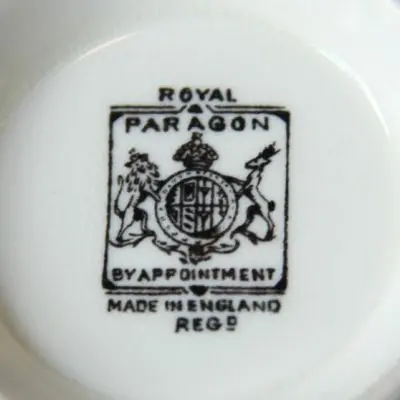
Credit: https://myporcelains.com/porcelain-marks/paragon
Contact Us TodayParagon China Marks From 1930–1960
During the mid-20th century, Paragon became increasingly recognised for its fine bone china tea sets and decorative porcelain.
Marks from this period often included:
- PARAGON CHINA
- MADE IN ENGLAND
- Royal Warrant references
- Crown motifs
This period includes many popular collector patterns and commemorative designs.
Paragon China Marks From 1960–Present Day
Later Paragon marks often included clearer manufacturer details and references to England.
In 1960, Paragon became part of the Royal Doulton group, and production continued under the Paragon name for several years.
Eventually, Paragon branding was phased out as production moved into Royal Doulton ranges.

Credit: https://myporcelains.com/porcelain-marks/paragon
Where To Sell Paragon China
If you are looking to sell Paragon China, tea sets, figurines or decorative porcelain, Potteries Auctions can help.
Our specialists can identify marks, research patterns and advise whether your pieces are suitable for auction.
Selling through a specialist auction house allows collectors to compete for desirable pieces, helping achieve the strongest possible market value.
Request a free valuation today or send photographs of your Paragon China to our specialists.
Contact Us TodayFrequently Asked Questions About Paragon China
Paragon China is usually identified by the maker’s mark on the underside of the piece. These marks changed over time and can help determine the approximate date of manufacture. The mark should be considered alongside the pattern, decoration, condition and rarity when assessing a piece.
The value of Paragon China depends on factors including age, rarity, design, condition and collector demand. Complete tea services, unusual patterns, hand-painted examples and royal commemorative pieces can often attract stronger interest. The best way to determine value is through an expert auction valuation.
Paragon China is no longer produced under its original name. The company became part of Royal Doulton in 1960, and the Paragon brand was eventually discontinued. However, existing Paragon pieces remain popular with collectors.
Most Paragon China pieces feature a maker’s mark, although marks can sometimes be faint, worn or incomplete. Unmarked pieces should not automatically be dismissed, as identification may also rely on the shape, decoration and style of the porcelain.
Paragon China can be sold through specialist auction houses, antique dealers or private sales. A specialist ceramics auctioneer can identify your pieces, provide an accurate valuation and advise on the best selling route.
Yes. Potteries Auctions provides free, no-obligation valuations for Paragon China and other British ceramics.
Simply send photographs of your Paragon pieces, including:
– The front and back of the item
– The maker’s mark underneath
– Any pattern numbers
– Any artist signatures
– Any damage or restoration
Our specialists will advise on age, authenticity and potential auction value.