
Aynsley China has been admired by collectors for over 200 years, renowned for its fine bone china, delicate decoration and beautifully crafted tableware. Founded in 1775 by John Aynsley in Staffordshire, the company developed a reputation for producing elegant porcelain, highly detailed floral designs and exceptional hand-painted pieces.
From traditional tea services and decorative vases to commemorative pieces and artist-painted porcelain, Aynsley has created many collectable designs that remain popular with collectors today. At Potteries Auctions, we specialise in British ceramics and have been selling Aynsley China, Royal Worcester, Royal Doulton, Wedgwood, Moorcroft and other important pottery brands for over 25 years.
Whether you are looking to identify an Aynsley mark, discover the age of a piece, or understand whether your china could be valuable, our specialists are here to help.
Request a free valuation today or send us images via WhatsApp for expert advice.
Contact Us TodayWondering What Your Aynsley China Is Worth?
Our specialists value hundreds of pieces of British ceramics every month.
✅ Free auction valuation
✅ No obligation
✅ British ceramics specialists
Are you looking to sell Aynsley China, identify a maker’s mark, find a pattern name or simply discover whether your collection has value?
Our ceramics specialists can help. You can submit photographs using our online valuation form, send images via WhatsApp, or arrange a free appointment at one of our salerooms.
Why Trust Potteries Auctions With Your Aynsley China Valuation?
With over 25 years of experience handling British ceramics, Potteries Auctions has become one of the UK’s leading auction houses specialising in collectable pottery and porcelain.
Based in Staffordshire — the historic home of British ceramics — our specialists regularly work with collectors, families and private sellers across the UK to identify and value important ceramic manufacturers.
Aynsley has a long history of producing fine bone china, with particular recognition for hand-painted fruit, floral decoration, decorative porcelain and elegant tableware.
The value of Aynsley China depends on several factors including age, rarity, pattern, condition, decoration and collector demand.
Some Aynsley pieces remain affordable, while exceptional hand-painted examples, unusual designs and complete services can attract significant interest from collectors.
Contact Us TodayHow Do I Know If My Aynsley China Is Valuable?
The value of Aynsley China depends on:
- Age
- Maker’s mark
- Pattern and design
- Condition
- Completeness
- Quality of decoration
- Artist signatures
- Rarity
- Collector demand
The first step in identifying Aynsley China is to look at the mark on the underside of the piece.
Aynsley used many different backstamps throughout its history, and these can provide important clues about when a piece was produced.
However, the mark alone does not determine value. A later hand-painted cabinet piece may be worth more than an older mass-produced item, while a complete tea service in excellent condition may appeal strongly to collectors.
Why Is Aynsley China Famous?
Aynsley was founded in 1775 by John Aynsley in Longton, Staffordshire, making it one of England’s long-established ceramic manufacturers.
The company became especially recognised for producing high-quality bone china featuring:
- Fine floral decoration
- Hand-painted designs
- Elegant tea services
- Decorative vases
- Commemorative china
- Luxury giftware
During the 19th and 20th centuries, Aynsley developed a strong reputation for craftsmanship and became associated with high-quality English porcelain.
The company also produced pieces connected with royal occasions and held Royal Warrants, further strengthening its reputation among collectors.
What Makes Aynsley China Collectable?
Aynsley produced a wide range of designs, meaning there are many different areas of interest for collectors.
Hand-Painted Aynsley China
Some of the most desirable Aynsley pieces feature exceptional hand-painted decoration.
The company became particularly admired for detailed floral, fruit and botanical designs, often enhanced with gilding and intricate craftsmanship.
Pieces with artist signatures, unusual decoration or exceptional quality can attract greater collector interest.
Aynsley Tea Sets
Aynsley tea services remain popular with collectors who appreciate traditional British bone china.
Complete sets containing:
- Cups and saucers
- Teapot
- Milk jug
- Sugar bowl
- Serving plates
are generally more desirable than individual pieces.
Condition is particularly important, as chips, cracks and worn decoration can affect value.
Aynsley Fruit and Floral Patterns
Aynsley became especially well known for decorative fruit and floral designs.
Patterns featuring colourful flowers, botanical motifs and hand-painted decoration continue to appeal to collectors looking for elegant examples of British china.
Aynsley Commemorative China
Aynsley produced many commemorative pieces celebrating royal events and important occasions.
These items can appeal to collectors interested in British history, royal memorabilia and decorative porcelain.
Aynsley Cabinet Pieces
Decorative cabinet pieces, including vases, dishes and ornamental porcelain, often showcase the highest levels of craftsmanship.
Pieces with detailed painting, elaborate gilding or unusual forms can be particularly sought after.
Get a Free Auction Estimate for Your Aynsley China
What Markings Should I Look For On Aynsley China?
When identifying Aynsley China, look for:
The Aynsley Backstamp
Most Aynsley pieces feature a mark on the base showing details such as:
- AYNSLEY
- JOHN AYNSLEY & SONS
- AYNSLEY CHINA
- FINE BONE CHINA
- ENGLAND
The style of the mark can help identify the approximate period of manufacture.
Pattern Numbers
Many Aynsley pieces include pattern numbers.
These numbers can help identify specific designs and may assist collectors in researching the history and rarity of a piece.
Artist Signatures
Some Aynsley porcelain features the signature of the artist responsible for the decoration.
Recognised artists and exceptional hand-painted work can significantly increase collector interest.
Contact Us TodayAynsley China Marks From 1775–1860
Early Aynsley pieces can be more difficult to identify, as marking practices varied throughout the company’s early history.
Some early examples may feature:
- Impressed marks
- Painted initials
- Simple factory marks
Because early pieces are less commonly encountered, expert identification is often recommended.
Aynsley China Marks From 1860–1900
During the Victorian period, Aynsley introduced more consistent marking systems.
Marks from this period may include:
- AYNSLEY name marks
- Printed backstamps
- Manufacturer details
From 1891, the addition of “England” to marks can help identify later production for export markets.
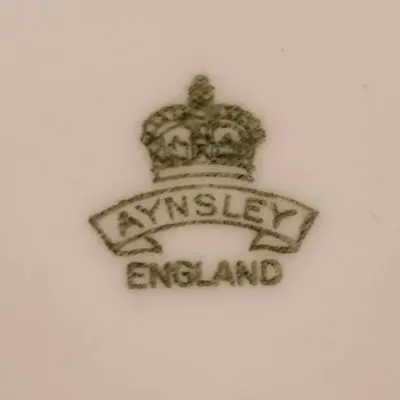
Aynsley China Marks From 1900–1970
During the early 20th century, Aynsley became increasingly recognised for fine bone china and decorative tableware.
Marks commonly include:
- Crown motifs
- AYNSLEY branding
- England references
- Pattern numbers
Aynsley also introduced dating systems on some pieces during the 20th century, helping collectors estimate production dates.
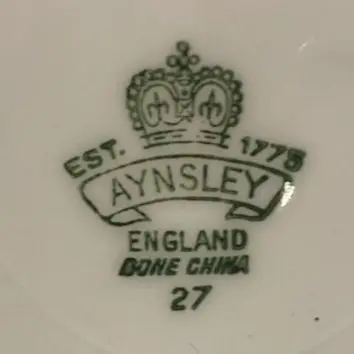
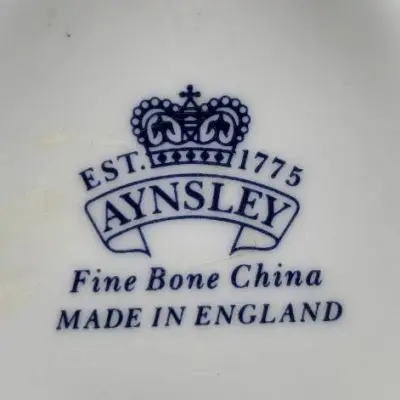
Aynsley China Marks From 1970–Present Day
Later Aynsley marks often feature clearer branding, including:
- AYNSLEY
- FINE ENGLISH BONE CHINA
- MADE IN ENGLAND
During the later 20th century, Aynsley continued producing decorative china, giftware and commemorative pieces.
Credit: https://myporcelains.com/aynsley-marks-dating
Most Collectable Aynsley China Patterns
Aynsley produced hundreds of patterns throughout its history, from traditional floral designs to highly decorated collector pieces.
Some patterns and styles that attract collector interest include:
Contact Us TodayAynsley Orchard Gold
One of the best-known Aynsley designs, Orchard Gold features colourful fruit decoration with rich detailing and gilded highlights.
These pieces remain popular due to their decorative appeal and craftsmanship.
Aynsley Wild Tudor
Wild Tudor features floral decoration inspired by Tudor roses and English garden designs.
Its traditional style continues to appeal to collectors of British bone china.
Aynsley Pembroke
Pembroke is recognised for elegant floral decoration and fine bone china craftsmanship.
Complete tea services in good condition can be particularly attractive to collectors.
Aynsley Floral and Botanical Designs
Aynsley produced many floral patterns featuring roses, flowers and botanical motifs.
Hand-painted examples and unusual designs may attract additional interest.
Aynsley Royal Commemorative Pieces
Royal commemorative pieces remain popular among collectors of British history and royal memorabilia.
Items produced for significant occasions can hold particular appeal.
Contact Us TodayWhere To Sell Aynsley China
If you are looking to sell Aynsley China, tea sets, vases or decorative porcelain, Potteries Auctions can help.
Our specialists can identify marks, research patterns and advise whether your pieces are suitable for auction.
Selling through a specialist auction house allows collectors to compete for desirable pieces, helping achieve the strongest possible market value.
Request a free valuation today or send photographs of your Aynsley pieces to our specialists.
Frequently Asked Questions About Aynsley China
Aynsley China is usually identified by the maker’s mark on the underside of the piece. The style of the backstamp can help determine the approximate date of manufacture, but the mark should be considered alongside the pattern, decoration, condition and rarity.
The value of Aynsley China depends on factors including age, rarity, decoration, condition and collector demand. Hand-painted pieces, complete services and unusual designs can often attract stronger interest. The best way to determine value is through an expert auction valuation.
Aynsley continues as a recognised china brand, although ownership and production have changed over time. The company has experienced several changes since the late 20th century.
Most Aynsley pieces feature a maker’s mark, although earlier examples may have faint or incomplete marks. Unmarked pieces should not automatically be dismissed, as identification can also rely on shape, decoration and craftsmanship.
Aynsley China can be sold through specialist auction houses, antique dealers or private sales. A specialist ceramics auctioneer can identify your pieces, provide an accurate valuation and advise on the best selling route.
Yes. Potteries Auctions provides free, no-obligation valuations for Aynsley China and other British ceramics.
Simply send photographs of your Aynsley pieces, including:
– The front and back of the item
– The maker’s mark underneath
– Pattern numbers
– Artist signatures
– Any damage or restoration
Our specialists will advise on age, authenticity and potential auction value.