
Established in 1793, Minton Pottery is one of Britain’s most celebrated ceramics manufacturers, producing fine bone china, porcelain, encaustic tiles, and decorative wares for over two centuries. Today, antique Minton pieces — particularly early examples and rare designer collaborations — are highly sought after by collectors. At Potteries Auctions, we have over 25 years’ experience valuing and selling Minton china and porcelain, giving our specialists in-depth knowledge of Minton pottery marks, backstamps, and date cyphers. If you would like to discover what your Minton piece could be worth, our experts are happy to help.
If you would like to discover what your Minton piece could be worth, our experts are happy to help — simply get in touch for a free, no-obligation valuation.
Contact Us TodayWondering If Your Minton Pottery Is Valuable?
Certain Minton pieces regularly attract strong auction interest, particularly if they include:
✅ Early Thomas Minton marks (late 18th–early 19th century)
✅ Rare printed Mintons crown backstamps
✅ Signed pieces by designers such as M. L. Solon
✅ Pâte-sur-Pâte decoration
✅ Parian figures or limited production pieces
✅ Clear impressed date cyphers from the 19th century
Even marked or imperfect examples may have value depending on rarity and demand.
If you would prefer to speak with an expert in person, you can book a free appointment with our valuers at one of our salerooms. Alternatively, if it’s easier, you can submit photographs using our online valuation form, and a member of our team will be in touch with an assessment.
Valuations are also welcome via WhatsApp: send your images to 07864 667940.
A Brief History of Minton Pottery
Established in 1793, Minton Pottery is an iconic British ceramics manufacturer with a storied legacy of producing fine bone china, earthenware, and porcelain items for over two centuries. Their wares have graced the tables of nobility and have been coveted by collectors worldwide. If you’ve come across a piece of Minton porcelain or are considering adding it to your collection, understanding how to identify Minton pottery markings and backstamps is essential!
Founded in 1793 by Thomas Minton in Stoke-on-Trent, England, Minton Pottery quickly became synonymous with excellence in ceramics. In its early years, Minton gained royal patronage for its hand-painted porcelain and bone china.
Under the leadership of Herbert Minton in the mid-19th century, the company expanded its offerings and pioneered encaustic tile manufacturing. The late 19th and early 20th-centuries saw Minton’s prominence in international exhibitions, with collaborations with renowned designers such as Christopher Dresser and Augustus Welby Pugin.
Navigating the challenges of the 20th-century, Minton underwent ownership changes but maintained a commitment to craftsmanship. Today, Minton’s legacy lives on through its highly collectible and sought-after pieces, a testament to centuries of artistic innovation and dedication to the artistry of ceramics.
Get a Free Auction Estimate for Your Minton Pottery
How to Identify Minton Pottery Marks
Whether you’re exploring antique Minton pieces from the 18th-century or more recent creations, understanding the evolution of Minton’s backstamps and the unique characteristics of their pottery will equip you with the knowledge you need to better spot and appreciate them.
First, it’s important to note that over the company’s near 200-year history the names associated with Minton marks on porcelain and china went through several changes over time:
- c1796: Thomas Minton
- c1800: Minton, Poulson and Pounall
- c1801-02: Minton Poulson and Co
- c1802-08: Minton and Poulson
- c1809-17: Thomas Minton
- c1817-27: Thomas Minton and Sons
- c1824: Thomas Minton and Son
- c1824-36: Thomas Minton
- c1836-41: Minton and Boyle
- c1841-45: Herbert Minton and Co
- c1845: Minton and Hollins
- c1847-73: Herbert Minton and Co
- c1873-84: Mintons
- c1884: Mintons
Types of Minton porcelain marks
Note that early Minton earthenware and pre-1805 porcelains appear to be unmarked. Before 1805, the pattern numbers would usually be ‘No 123’ or ‘N 123’. After 1805, the numbers usually changed to ‘:123’ or ‘.123’.
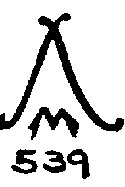
From 1805-16, this mark was used and was always in an overglaze blue enamel, however it is not used on any pieces without gilding. Ungilded Minton pieces from this time either have no marking, or a pattern number only.

In the 1820s, the Dresden crossed-swords mark (sometimes confused with Coalport ware) was used in underglaze blue on a type of floral encrusted porcelain.
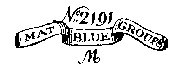
Several printed Minton marks of the 1820-30s incorporated the ‘M’ initial.
B B
NEWSTONE
Minton earthenware from 1830-60 featured this impressed mark.

Many printed backstamps of the Minton & Boyle period (1836-41) bore ‘M & B’ initials.
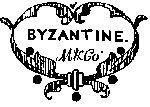
During 1841-73, many different marks were used which often used ‘M & Co’ initials.
M & H
Many printed marks of the Minton & Hollins period (1845-68) period features the above initials.
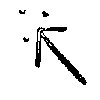
This incised mark is found on Minton parian figures and groups, c1845-60.

This is a printed or painted ermine mark that was used on fine Minton porcelains, c1850-70. A similar incised mark is found on Minton parian and other figures from about 1845.
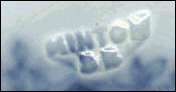
The Minton name was incorporated in many printed marks from 1851 onwards. This basic impressed Minton mark above was used from 1862-72. From 1873 onwards, the term ‘Mintons’ was used instead of ‘Minton’.

This was the standard printed backstamp from 1863-72.
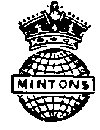
From 1873-1912, this revised basic printed mark with a crown was used. The word ‘England’ was added from 1891.

From 1912-50, Minton wares featured this basic printed mark, often with ‘Made in England’ added.
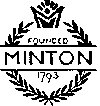
This new printed trade mark has been used since 1951 and is still used to the present day.
L Solon
M L Solon
During their time, Mintons employed many talented and famous ceramic artists and designers, many of which were allowed to sign their work. The most famous ceramic artist was M. L. Solon, whose signature you will find on valuable cameo-like Pâte-sur-Pâte wares.
How to identify Minton date marks
From 1842, Minton introduced year cyphers consisting of impressed marks which were used on some Minton ware pieces to indicate the date of manufacture:
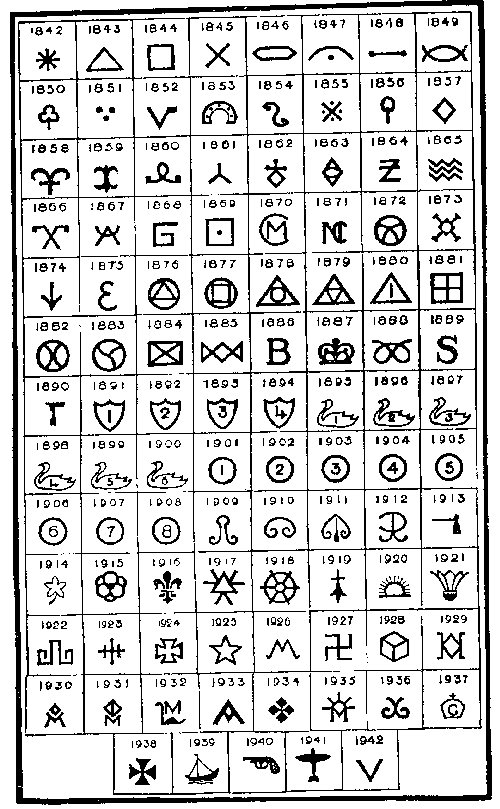
Image source for all markings: thepotteries.org
FAQ
Minton pottery marks are usually found on the base of the piece and may be printed, impressed or painted. Early examples may show “Thomas Minton” or partnership names such as “Minton & Boyle.” Later pieces often feature a crown above the name “Mintons,” sometimes with “England” or “Made in England” included. Date cyphers introduced from 1842 can also help identify the year of manufacture.
The crowned Mintons mark was widely used from 1873 to 1912, with “England” added from 1891. It is one of the most recognisable Minton backstamps and appears on a wide range of porcelain and bone china wares.
In general, earlier Minton pieces from the late 18th and 19th centuries are more desirable to collectors, particularly if they feature rare partnership marks, designer signatures, or detailed decorative techniques such as Pâte-sur-Pâte.
From 1842 onwards, Minton introduced impressed year marks known as date cyphers. These marks allow certain pieces to be dated precisely and can assist in determining rarity and potential value.
Yes. Some Minton wares were signed by notable ceramic artists, including M. L. Solon, whose Pâte-sur-Pâte decorations are particularly collectible. Signed examples often attract stronger auction interest.
Yes. Clear photographs of your item, including the backstamp and any damage, are usually sufficient for an initial expert assessment. Potteries Auctions offers free, no-obligation valuations both in person and online.
You can:
Submit images through our online valuation form
Send photos via WhatsApp 07864 667940
Book an in-person appointment
Email: enquiries@potteriesauctions.com
Why Trust Potteries Auctions With Your Minton Valuation?
As specialists in British ceramics, Potteries Auctions has over 25 years’ experience handling Minton pottery, porcelain and fine bone china. Based in the heart of Stoke-on-Trent — the historic home of English ceramics — our team regularly values and sells early Thomas Minton pieces, Mintons crown-mark wares, and rare designer collaborations.
Our expertise in identifying authentic Minton marks, date cyphers and factory backstamps allows us to provide accurate, market-led valuations grounded in real auction results — not estimates pulled from generic price guides.
Whether you are curious about a family heirloom or considering selling a collection, you can be confident your enquiry will be handled by genuine ceramics specialists.
How to Sell Minton Pottery at Auction
At Potteries Auctions, we can identify and provide valuations on a wide range of Minton Pottery pieces. Our team can help value your collection, turn you into a collector or advise on how much your Minton China and porcelain could be worth.
Please get in touch with us if you’re looking for an expert evaluation and are seeking to sell your Minton Pottery. Free valuation days are held every Tuesday at our Silverdale saleroom – to book an appointment, use our online booking form here. You can also email us at enquiries@potteriesauctions.com or call us on +44 (0)1782 638100. Valuations can even be provided via WhatsApp – simply send some clear images of your items via the app to 07864 667940.
1 thought on “Minton Pottery Marks & Backstamps Guide — How to Identify & Value Your Piece (2026)”
Comments are closed.