
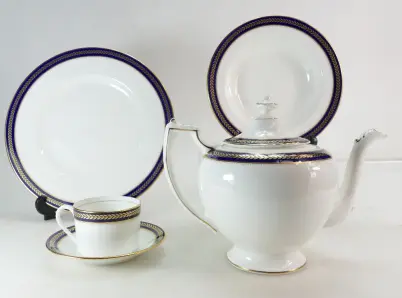
If you’re trying to identify a piece of Coalport porcelain, the backstamp or printed mark on the base can help determine its age, authenticity and potential value. Coalport china marks evolved over more than two centuries, making accurate identification essential for collectors and sellers alike. At Potteries Auctions, we have handled and sold Coalport porcelain for over 25 years, giving us first-hand experience with historic and modern backstamps. In this guide, we explain how to recognise Coalport marks, how to date your piece, and what those markings can reveal about its value.
If you would like to discover the value of your Coalport china, our specialists are happy to help, request a free valuation today or send us images via WhatsApp for expert advice.
Contact Us TodayA Brief History of Coalport China
Coalport is renowned for producing high quality tableware, figurines and commemorative pieces that has captured the hearts of both casual appreciators and hardcore collectors alike for over 200 years. If you’re a collector or simply curious about these exquisite pieces, it’s good to understand how to identify Coalport China markings and backstamps. In this guide, we’ll look into the fascinating world of Coalport pottery and help you start to recognise some of their most distinctive markings.
The Coalport China Works was founded by John Rose in 1795 in Coalport, Shropshire. Coalport was named Coalport because of the coal that was transferred from canal boats to river vessels in the Coalbrook Dale area. The Coalport porcelain factory was the first factory to be established in the Ironbridge Gorge, and the original factory buildings today house the Coalport China Museum.
Over the years, it gained a reputation for its high-quality porcelain, including dinnerware, decorative pieces, and more. Coalport has produced an array of exquisite patterns and designs since its inception, making it a sought-after brand for avid collectors.
The world of Coalport pottery is rich and diverse, so don’t be discouraged if you encounter variations in backstamps and marks. The beauty of these pieces lies not just in their aesthetic appeal but also in the stories and history they carry with them.
How to Date Coalport China
Coalport marks evolved significantly throughout the 19th and 20th centuries. By identifying the style of backstamp, wording and inclusion of terms such as “England” or “Made in England”, you can often narrow production down to a specific period.
Are Coalport Pieces Valuable?
The value of Coalport china depends on several factors:
- Age and rarity
- Condition
- Pattern and decorative detail
- Whether the piece is part of a complete set
- Collector demand
Early 19th-century pieces and limited figurines can achieve strong prices at auction, while later mass-produced wares may be more modestly valued. Backstamps help determine age — but condition and rarity ultimately influence market value.
Get a Free Auction Estimate for Your Coalport China
How to Identify Coalport China Markings
Please note that early pre-1805 porcelains were unmarked, and that maker’s marks were rarely used before 1820.

This is an example of one of several printed Coalport marks from 1830-50 that incorporates the name ‘John Rose & Co’ or ‘J.Rose & Co’. Many printed backstamps also incorporate the initials ‘J R & Co’ or ‘I R & Co’.
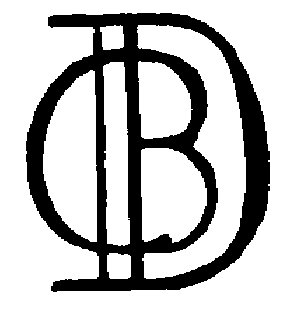
This painted or gilt monogram mark was used from 1851-61.
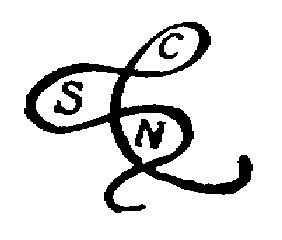
This printed or gilt ‘ampersand’ Coalport mark was in circulation from 1861-1875. The name ‘Coalport’ rarely appears with this mark.
COALPORT AD 1750
From 1875-81, this plain printed or painted letter mark was used.
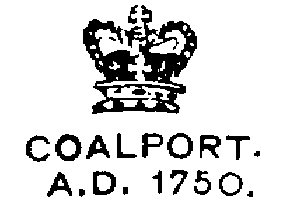
This was the standard printed Coalport backstamp from 1881 to around 1939. ‘England’ was added to the mark around 1891, and ‘Made in England’ replaced ‘England’ from about 1920.


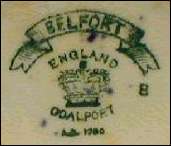
These are some examples of standard Coalport marks that include the word ‘England’ from around 1891. Sometimes the name of the pattern is also included.

Despite the specific date being unknown, we can surmise that the inclusion of ‘Made in England’ on the backstamp of this cottage ornament dates it to post-1920.
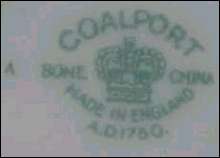
This is an example of post-war printed Coalport mark. The company moved from Coalport to Stoke in 1926, and continues to the present day as part of the Wedgwood Group.
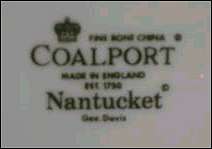
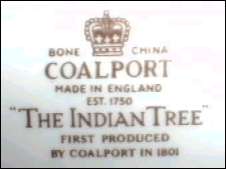
Some examples of more modern Coalport backstamps.
Image credit: thepotteries.org
Because Coalport produced porcelain for over two centuries, backstamps can vary considerably. Understanding the evolution of these marks is the key to correctly identifying your piece. If you’re unsure, professional evaluation ensures accuracy.
Frequently Asked Questions About Coalport China Marks
The easiest way to estimate the age of Coalport porcelain is by examining the backstamp. Early pieces (pre-1805) were often unmarked, while later marks included variations of “John Rose & Co”, ampersand styles, printed crowns and eventually “England” or “Made in England”. Comparing your mark to dated examples can help narrow production to a specific period.
No. Very early Coalport porcelain was sometimes unmarked. In other cases, paper labels may have been used and later lost. If no backstamp is present, professional assessment may be required.
The phrase “Made in England” generally indicates a piece produced after around 1920, when export laws required clearer country-of-origin markings.
Some Coalport figurines and limited editions can achieve strong prices at auction, particularly if they are in excellent condition and part of a desirable series. Value depends on age, rarity and collector demand.
Coalport production moved from Shropshire to Stoke-on-Trent in the 20th century and later became part of the Wedgwood Group. Modern pieces may carry different backstamps reflecting these changes.
How to Sell Coalport Pottery at Auction
At Potteries Auctions, we can identify and provide valuations on a wide range of Coalport pieces. Our team can help value your collection, turn you into a collector or advise on how much your Coalport China could be worth.
Please get in touch with us if you’re looking for an expert evaluation and are seeking to sell your Coalport pottery. Free valuation days are held every Tuesday at our Silverdale saleroom – to book an appointment, use our online booking form here. You can also email us at enquiries@potteriesauctions.com or call us on +44 (0)1782 638100. Valuations can even be provided via WhatsApp – simply send some clear images of your items via the app to 07864 667940.