
At auction, estimates are only a guide. The real insight comes from what actually happens when bidders compete in real time — and whether items consistently sell above, within, or below expectations. Based on 912 lots sold by Potteries Auctions, we analysed how Jewellery, Coins & Currency, and Watches perform against their auction estimates. The results reveal clear differences in buyer behaviour, demand strength, and value consistency across categories.
At Potteries Auctions, we regularly handle rare and collectable jewellery, gold and watches. If you would like to discover the value of your collection, our specialists are happy to help, you can book a free appointment with our valuers at one of our salerooms. Alternatively, if it’s easier, you can submit photographs using our online valuation form, and a member of our team will be in touch with an assessment.
Valuations are also welcome via WhatsApp: send your images to 07864 667940.
Executive Summary: Auction Performance at a Glance
Across 912 lots:
- 16% sold above estimate
- 62% sold within estimate range
While most items achieve expectations, there are important differences between categories — especially in how often competitive bidding drives prices above estimate.
Category Breakdown: How Each Market Performs
Jewellery (712 lots)
Jewellery accounted for the largest share of sales, representing the core of the auction activity.
- Above estimate: 15.2% (108 lots)
- Within estimate: 63.9% (455 lots)
- Average hammer price: £150
Jewellery tends to perform steadily, with the majority of lots selling within expected ranges. However, a meaningful proportion still attracts competitive bidding and exceeds expectations, particularly for desirable or well-presented pieces.
Coins & Currency (106 lots)
Coins and currency show a stronger level of competitive demand relative to volume.
- Above estimate: 18.9% (20 lots)
- Within estimate: 68.9% (73 lots)
- Average hammer price: £221
Coins demonstrate the highest average hammer price across categories, and also a stronger tendency to exceed estimates. This suggests active collector demand and competitive bidding for quality pieces.
Watches (94 lots)
Watches show the most variable performance pattern.
- Above estimate: 19.1% (18 lots)
- Within estimate: 42.6% (40 lots)
- Average hammer price: £117
While watches occasionally achieve strong results above estimate, they are also the most likely category to sell below expectations. This reflects sensitivity to condition, brand, functionality, and market demand.
What “Above Estimate” Really Means
When an item sells above estimate, it typically indicates one or more of the following:
- Strong bidder competition
- Underestimated rarity or desirability
- Exceptional condition or provenance
- Market demand exceeding expectations
In this dataset, coins and watches show slightly higher rates of above-estimate performance than jewellery, suggesting stronger competition in specific niches.
What Sells Within Estimate Range
The majority of items across all categories sell within estimate:
- Jewellery: 63.9%
- Coins: 68.9%
- Watches: 42.6%
This reflects generally accurate valuation work and a stable auction environment where expectations align closely with realised prices.
Jewellery in particular shows strong consistency, making it one of the most predictable categories in terms of outcome.
Exceptional Auction Results: What Drives the Highest Auction Premiums?
While most items sell within or close to estimate, a small number of lots significantly outperform expectations. These exceptional results are often driven by rarity, strong collector demand, or underestimated value at the point of valuation.
Below are some of the strongest-performing lots from recent auctions, showing significant premiums above their estimated value.
Standout Jewellery Performance
A large collection of vintage costume jewellery from an estate sale achieved one of the highest premiums recorded.
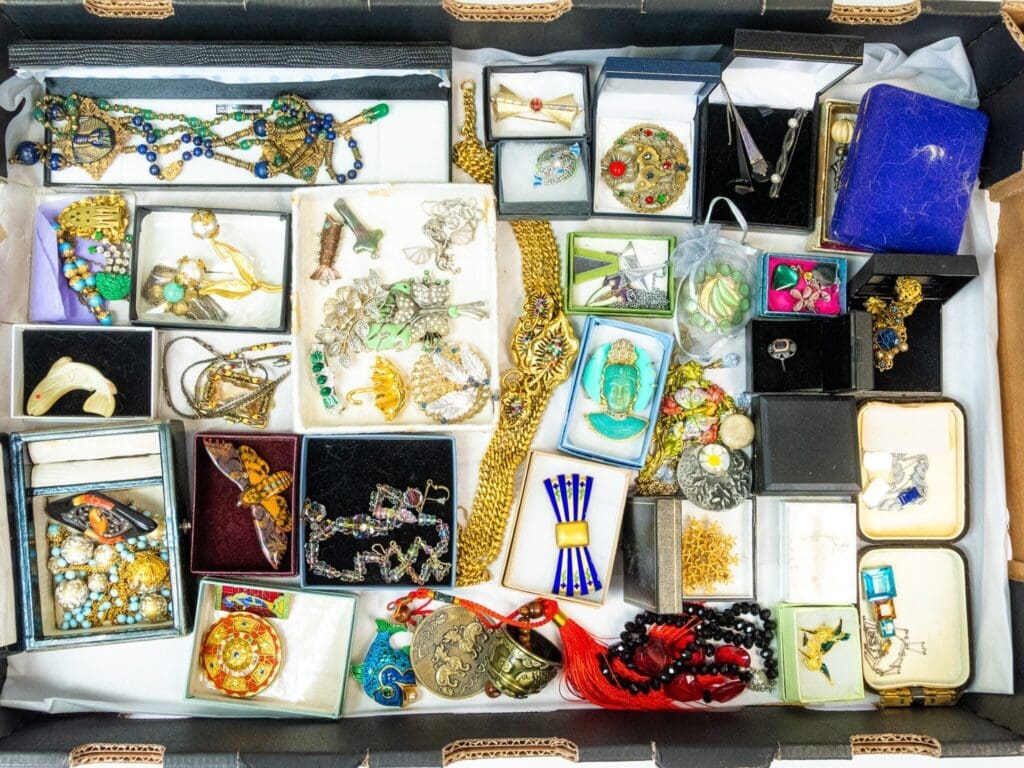
- Estimate: £60–£120
- Hammer Price: £750
- Result: 733% above estimate
This lot contained a mix of silver jewellery, Art Deco pieces, brooches, necklaces, and bangles. The strong result highlights how mixed estate jewellery can significantly outperform expectations when collector interest is high.
Another similar estate jewellery collection also performed strongly:
- Estimate: £60–£120
- Hammer Price: £440
- Result: 389% above estimate
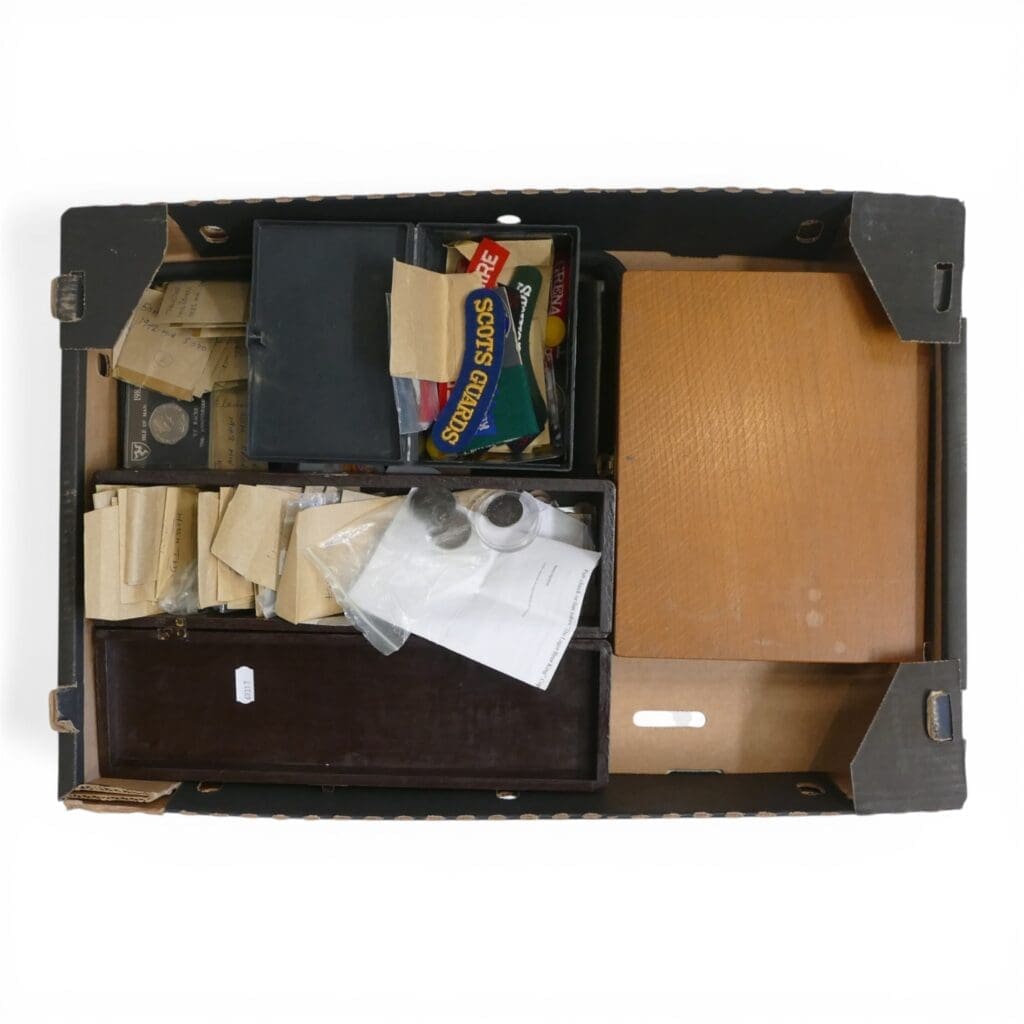
Again, the strength of demand came from variety and desirability within the lot rather than intrinsic metal value alone.
Exceptional Coins & Currency Results
Coins also demonstrated strong outperforming results, particularly where historical interest and condition aligned.
A collection of 18th and 19th century UK coins achieved a significant premium:
- Estimate: £40–£80
- Hammer Price: £340
- Result: 467% above estimate
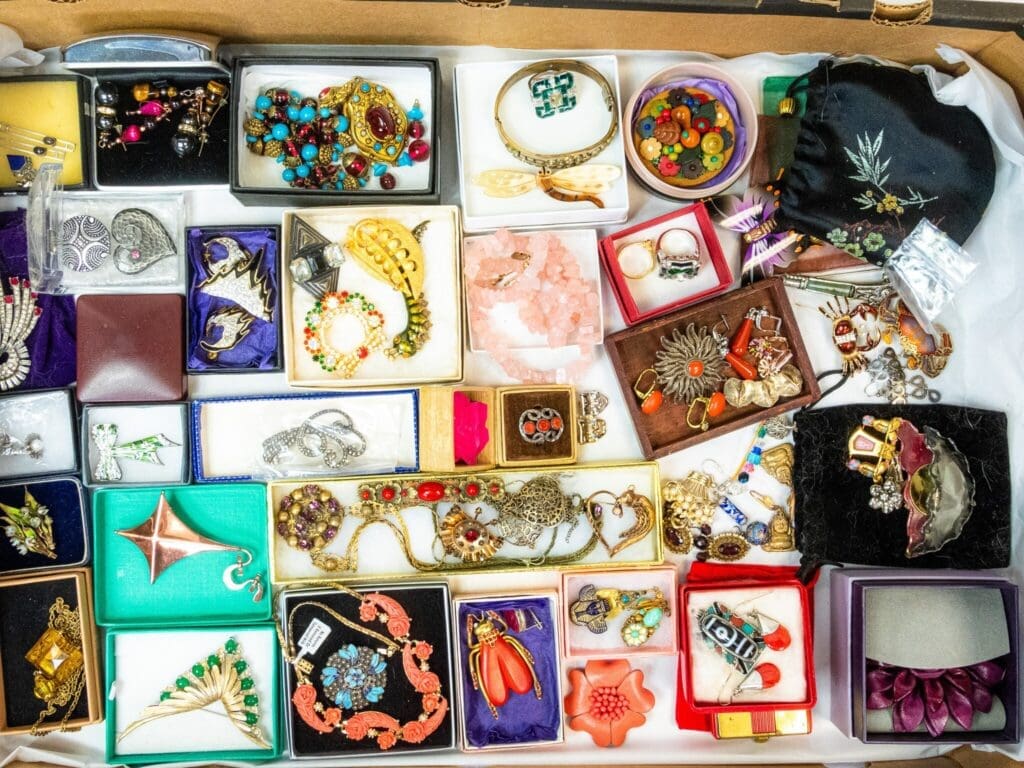
The lot included Cartwheel twopence coins, George III sixpences, and Victorian coinage — all of which attracted strong collector competition.
Another George III coin collection also exceeded expectations:
- Estimate: £15–£30
- Hammer Price: £110
- Result: 389% above estimate
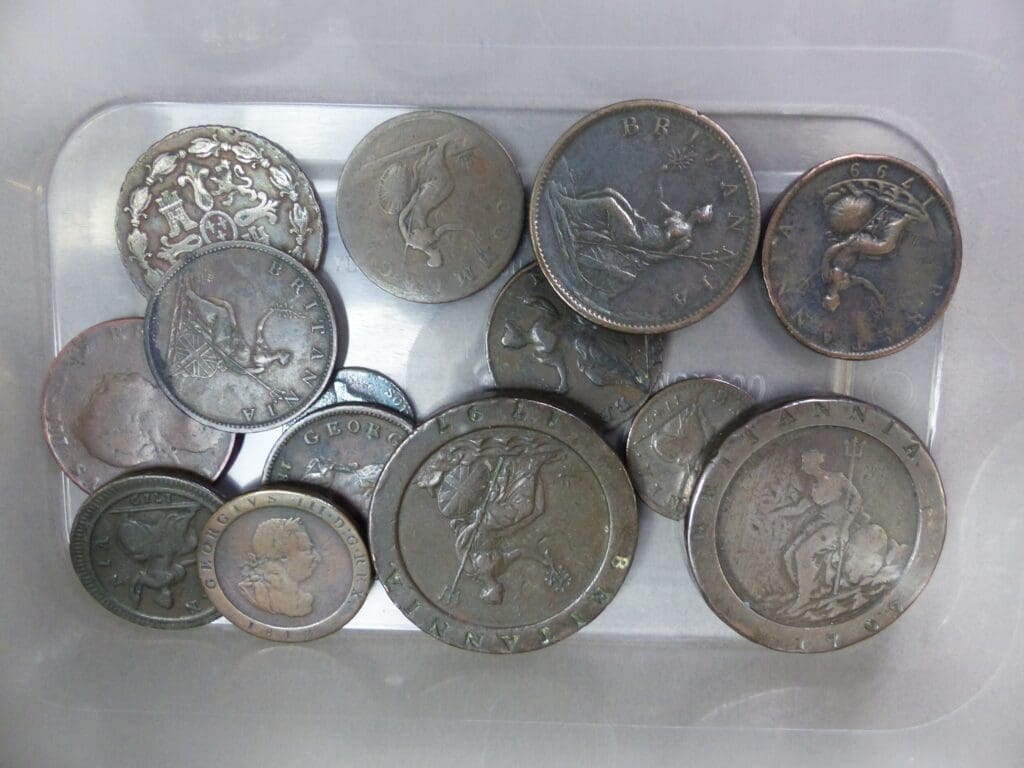
Even modestly estimated coin groups can perform strongly when rarity or demand is underestimated at cataloguing stage.
Key Insight: Why Do These Lots Outperform So Dramatically?
Across these standout results, a consistent pattern emerges:
High-performing lots typically include one or more of the following factors:
- Undervalued mixed estate collections
- Strong collector demand for historical coinage
- Broad variety within a single lot increasing bidder appeal
- Underestimated rarity at time of valuation
- Emotional or aesthetic appeal beyond intrinsic metal value
In many cases, the final hammer price is driven less by material value and more by competitive bidding between specialist collectors.
What This Means for Sellers
This data provides useful insight for anyone considering selling at auction:
- Coins & currency tend to attract the strongest competition and can exceed expectations
- Jewellery is the most stable and predictable category
- Watches require careful assessment due to higher variability in results
Understanding these patterns can help sellers make more informed decisions about timing, expectations, and selling method.
Across recent auctions, several lots significantly exceeded estimate expectations, with standout jewellery and coin collections achieving between 389% and 733% above their initial estimates. These results were primarily driven by collector demand, rarity, and strong competitive bidding within specialist categories.
Thinking of Selling Gold, Jewellery or Coins?
If you have gold, jewellery, watches, or coins and are considering selling, understanding true auction performance can make a significant difference to your outcome.
A professional valuation can help determine whether your items are likely to perform above estimate due to collector demand, or closer to intrinsic material value.
Frequently Asked Questions
Yes, but not for every category. Across 912 lots analysed, around 16% sold above estimate, with coins and watches showing slightly higher rates of competitive bidding than jewellery. Most items still sell within their estimate range, but strong demand can push certain lots significantly higher.
Coins & currency and watches tend to show the highest proportion of above-estimate results in this dataset.
However, some of the strongest individual performances come from:
Mixed estate jewellery lots
Rare or historic coin collections
Underestimated grouped lots
In some cases, items have sold for 300%–700% above estimate when competition is strong.
Items typically exceed estimate when:
– Multiple bidders compete for the same lot
– Rarity is underestimated in valuation
– The lot contains hidden or unexpected value
– Collector demand is stronger than expected
– Mixed estate lots attract broad interest
Estimates are guidance only and do not represent final market value.
Yes. Jewellery is the largest category by volume in this dataset, with 712 lots sold. While most jewellery sells within estimate range (around 64%), it also produces consistent demand and occasional strong overperformance, particularly for estate jewellery and mixed collections.
In many cases, yes. Coins often attract collector demand that exceeds intrinsic metal value. In this dataset, coins achieved higher average hammer prices and a higher proportion of above-estimate results compared to jewellery. This suggests strong collector-driven pricing rather than purely material-based valuation.
Watches tend to be more variable in outcome.
While some watches achieve strong prices, they also show the highest proportion of below-estimate results in this dataset (around 38%).
Performance depends heavily on:
– Brand
– Condition
– Working order
– Market demand
“Within estimate” means the hammer price falls between the low and high valuation range. Across this dataset, the majority of lots (around 62%) sold within estimate, showing that valuations are generally aligned with market outcomes.
Yes. Exceptional results in this dataset show items selling between 300% and 700% above estimate, particularly in: Jewellery estate lots Historic coin collections Underestimated mixed lots These cases are driven by strong bidding competition and specialist collector demand.
No. Estimates are a guide based on market knowledge at the time of valuation. Final prices are determined by buyer demand on the day of sale. Auction results can exceed or fall below estimates depending on competition, rarity, and condition.
Key factors include:
– Whether items are likely to attract collector demand
– Whether value exceeds scrap or intrinsic metal value
– Condition and completeness of items
– Current market demand for similar pieces
Auction results often exceed scrap valuations when collector interest is present.