
When you bring gold into an auction house, one question matters above all others: is it genuine, and what is it really worth?
Unlike quick online estimates or informal testing methods, professional auction houses use a combination of expertise, technology, and regulated standards to authenticate precious metals with accuracy and confidence. This is how professionals determine what your gold is truly worth.
At Potteries Auctions, our gold specialists value items every week. If you would like to find out what your gold could sell for, our team can provide a free, no-obligation valuation. You can book a free valuation, send your images on WhatsApp to 07864 667940 or book a face-to-face appointment – all with no obligation.
Contact Us TodayWhy Gold Authentication Matters
Gold is one of the most frequently misrepresented precious metals in circulation. Items may be:
- Plated rather than solid gold
- Lower purity than expected (e.g. 9ct instead of 18ct)
- Mixed with other metals or alloys
- Counterfeit or filled with base metals
Even experienced sellers can misjudge an item’s true composition. That’s why auction houses rely on professional testing rather than visual inspection alone.
Accurate authentication protects both buyers and sellers—and ensures fair market pricing.
Step 1: Visual Inspection and Hallmark Analysis
The first step is always a close inspection of the item itself.
Experts look for:
- UK hallmarks (such as 375, 750, 916)
- Maker’s marks and assay office stamps
- Signs of wear that may indicate plating
- Construction style and weight consistency
If hallmarks are present and clear, they provide an immediate indication of purity. However, not all items are hallmarked—especially older jewellery or imported pieces—so further testing is often required. You can read more in our guide to UK hallmarks in this guide Understanding Gold Hallmarks (UK Hallmark Guide for Sellers).
Step 2: Non-Destructive Metal Testing (XRF Analysis)
Modern auction houses increasingly use advanced technology to confirm metal composition quickly and safely.
At Potteries Auctions, we use a precious metals analyser, which works using X-ray fluorescence (XRF) technology.
In simple terms, the machine scans the surface of an item and instantly identifies its elemental composition—showing the percentage of gold, silver, and other metals present.
Why this matters:
- Results are delivered in seconds
- No damage or scratching to the item
- Highly accurate purity breakdown
- Detects plating and hidden base metals
This is especially important for:
- Antique jewellery
- Coins and bullion
- Designer pieces
- Delicate or historically significant items
It allows us to verify authenticity without compromising condition.
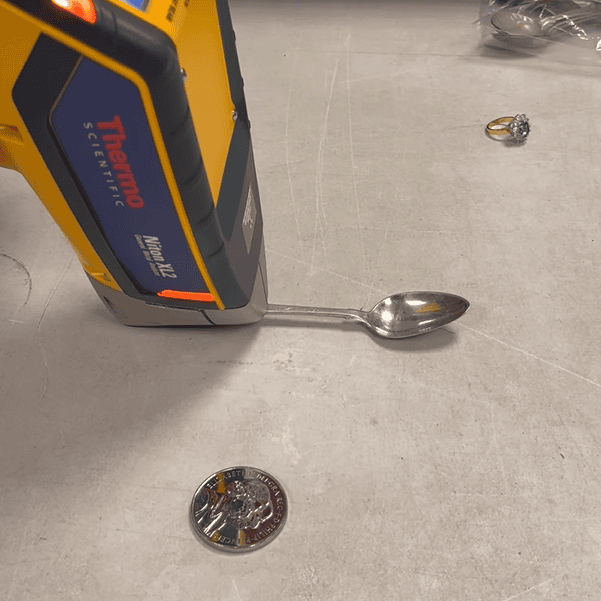
Check it out in action with a demonstration from our resident gold expert, Rod, over on our Facebook page!
Step 3: Traditional Testing Methods (When Needed)
While modern technology is highly accurate, experienced valuers may still use traditional methods in specific cases:
Acid Testing
A small sample mark is tested using acid solutions to determine gold purity. This method is effective but slightly invasive, so it is used selectively.
Density and Weight Comparison
Gold has a known density, so weight and volume comparisons can help confirm authenticity, especially for coins and bars.
Magnet and Conductivity Checks
Gold is non-magnetic and has distinct conductivity properties, helping to rule out obvious counterfeits.
These methods are typically used as supporting checks rather than primary valuation tools.
Step 4: Expert Valuation and Market Assessment
Once authenticity and purity are confirmed, the final step is valuation.
This includes:
- Current gold market price
- Weight and purity (e.g. 9ct, 18ct, 22ct)
- Brand or designer value
- Collectability or resale demand
- Condition and resale channel (auction vs bullion)
This is where experience matters as much as technology. Two identical gold items can achieve very different results depending on demand and presentation.
Get a Free Auction Estimate for Your Gold
Real Auction Results: Why Accurate Testing Matters in Practice
Understanding how gold is tested is important—but what truly demonstrates the value of accurate authentication is what happens when these items reach the auction floor.
At Potteries Auctions, correctly identified gold items regularly achieve strong competitive results, particularly when purity, weight, and craftsmanship are clearly verified through professional testing and hallmark confirmation.
Here are examples of recent jewellery results from our auctions:

A 9ct gold double Albert watch chain (52.34g) achieved £1,800 hammer price
Find out more
A 9ct gold charm bracelet with 14 charms (34.5g) sold for £1,100 hammer.
Find out more
A 9ct gold ID bracelet (16.5g) realised £600 hammer.
Find out moreThese results highlight a key point: accurate testing and authentication directly influence buyer confidence and auction performance.
When gold is properly verified—down to its exact purity, weight, and hallmarked origin—it attracts stronger bidding competition and often exceeds initial estimates.
Can You Test Gold at Home?
Many people search for ways to check gold at home, such as:
- Vinegar or acid tests
- Magnet tests
- Scratch tests
- Ceramic plate tests
While these methods can sometimes give clues, they are not reliable enough for valuation or sale purposes. They can also damage jewellery or lead to incorrect assumptions.
Professional testing remains the only way to confirm true purity and value.
How Auction Houses Protect Sellers and Buyers
The combination of expert assessment and advanced testing ensures:
- Sellers receive accurate valuations
- Buyers can trust catalogue descriptions
- Fraud and misrepresentation are prevented
- Items are correctly categorised for auction
This transparency is one of the key reasons auction houses remain trusted in the secondary gold market.
Gold and Silver Valuations at Potteries Auctions
At Potteries Auctions, our jewellery specialists value gold items every week, from simple 14k chains to designer jewellery set with diamonds or gemstones. Our investment in modern testing technology means we can assess items quickly, accurately, and with complete confidence.
If you would like to find out what your jewellery could sell for, our team can provide a free, no-obligation valuation.
Frequently Asked Questions: How Auction Houses Test and Authenticate Gold
Auction houses use a combination of expert visual inspection, hallmark verification, and scientific testing. This can include non-destructive X-ray fluorescence (XRF) analysis, which identifies the metal’s exact composition in seconds without damaging the item.
The most accurate modern method used in auction houses is XRF (X-ray fluorescence) testing. It provides a detailed breakdown of the metal’s purity and alloy content, helping confirm whether an item is solid gold, plated, or mixed with other metals.
No. Reputable auction houses use non-destructive testing methods wherever possible. XRF analysis allows gold and silver to be tested without scratching, cutting, or altering the item’s condition.
Gold testing machines provide fast, objective, and highly accurate results. They help eliminate human error, detect counterfeit or plated items, and ensure every valuation is based on verified metal content rather than assumption.
Hallmarks are a strong indicator of authenticity and purity, but they are not always enough on their own. Some items are unhallmarked, worn, or may have been altered over time. That’s why auction houses often combine hallmark analysis with physical testing.
XRF (X-ray fluorescence) is a scientific method that scans the surface of an item and reads its elemental composition. It can identify the percentage of gold, silver, and other metals present, making it ideal for accurate valuations in auction environments.
Fake or plated gold is identified using a mix of testing methods, including XRF analysis, density checks, and visual inspection. These techniques can reveal base metals beneath gold plating or inconsistencies in composition.
Yes. Modern XRF testing allows gold to be analysed without any physical damage. This is especially important for antique jewellery, coins, and high-value items where preserving condition is essential.
With modern equipment, gold testing typically takes only a few seconds per item. This allows auction houses to value collections quickly and efficiently while maintaining high accuracy.
Accurate testing ensures sellers receive fair valuations based on real gold content, not guesswork. It also prevents under- or over-valuation and helps items achieve stronger results when sold at auction.
You can:
Submit images through our online valuation form
Send photos via WhatsApp 07864 667940
Book an in-person appointment
Email: enquiries@potteriesauctions.com